Introduction
Today I will be discussing the different single camera techniques
used in the media industry, the four key components to focus on when making a
single camera piece, the different genres and formats relating to a single
camera production and the differences between using this technique and using a
multi-camera set up as well as the pros and cons of using a single camera set
up in comparison to a multi set up.
Camera
A single camera production uses one camera to film the whole series, the benefits of a single camera production is that there is less footage to go through one the production stage is completed, also you can work in much more cramped spaces as there is less equipment needed. But there can be negatives, to some people shooting one scene over and over to get the perfect shot could seem like a positive but it is very time consuming, there can also be the worry of having continuity errors in the piece as there is only one camera, if there are a lot of cuts in the production then it could be harder to remember what was in the scene. It can also be a lot easier to find locations as well because of the ability to film in tight spaces, sets are barely needed and more actual buildings are used.Lighting
The lighting in a single camera production is a lot easier to control as lighting each shot individually is a lot more simple. The lighting must be perfect in every shot to keep it looking linear. also, you have to avoid getting the reflector or key light in shot at all times. It's better to light on a sigle camera production because it gives the shots a lot more tone.
Sound
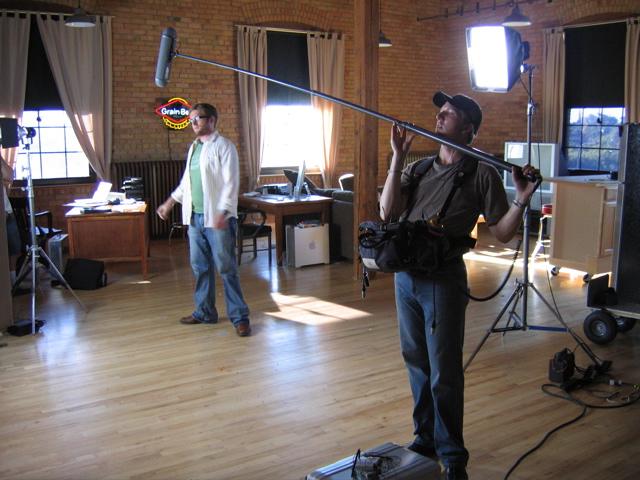 The number one rule of recording sound is to never use the in built microphone on your camera during a serious media production. There are too many variables that could affect the dialogue, most film makers will utilise a shotgun mic to pick up the dialogue, and a multi track camera to record the background noise, that way in post production there are less jumps in the audio. If a shot is cut mid dialogue, the editor will mute the sound on the second footage and add the main audio ontop, snycing it to the appropriate place. It is better when the actor talking on the second footage is facing away from the camera, kind of like an over the shoulder shot so that the syncing would look a lot more fluid, This is also beneficial because they have a choice over what audio to use as they have shot multiple times.
Coverage
This kind of mixes in with my previous point, the benefit of a single camera production is that you can film one shot, cut it, film it at another angle and then cut and merge those two together. The only con is that the actors are repeating the lines over and over again, giving it subtle differences in the dialogue, causing a syncing problem. This is where aa multiple camera set up is beneficial because you can get the exact same sequence from multiple angles and it will snyc perfectly, the only con of this is that the directors and set designers have to think of crafty ways to hide the camera out of site at all times.
Editing
 Editing in post production can take a long time regardless if it is a single or multiple camera production. But in the long run, it is a lot easier to comb through the footage of a single camera production than a multiple camera production, with a single, you would have carefully planned out each angle you wanted it filmed and then filmed it the way the storyboard details. With a multiple camera production, you have more than two cameras pointing at different angles, sure you have more choice in the shots that you use, but that is almost double the amount of footage taken compared to a single camera.
Pictured: inside the set of the coffee shop 'Central Perk' in the popular sitcom Friends.
Single Camera Genre and Formats
 Another popular series that uses this method is a favourite in America, but is only seen on BBC Four every now and then, which is Parks And Recreation, which I believe to be one of the funniest american sitcoms ever made. (Sorry Office)
 Drama too uses only single camera, like the BBC series, Sherlock or Doctor Who. Pretty much anything that is written by Stephen Moffat for the BBC is a single camera production.
Multi Camera Techniques
The main difference between a single camre production and a multiple camera is that it is easier to get that perfect take in more than one camera ange, with a single camera, you have to shoot and then reset in a different angle, this can cause continuity errors, like a drink in the background suddenly rising and falling in fluidity. Exples of shows that use a single camera woud be My Name Is Earl, Obviously Parks And Recreation like I said before, The Office and Call The Midwife. Examples of a multiple camera production would be Reality cometition shows like The X Factor, And Britains Got Talent. Another genre of shows would be comedies like The Big Bang Theory, How I Met Your Mother, Friends, Two Broke Girls and pretty much any American comedy show on E4.

Mikey this is unfinsihed so cannot pass at present. It will need to be completed asap after the half-term break.
ReplyDeleteSean
This is just aboyt a pass but contains quite a lot of issues - sitcoms/soaps etc are generally multi-cam setups. Your poins are not always accurate elsewhere. If there is time it would be worth going through this carefully. If not it is, as I say, just scraping a pass!
ReplyDelete